Case study · Seawater piping
A 16" seawater line on a platform: three inspections in four months
In seawater cooling lines, scale and rust build up inside the pipe and accelerate corrosion. On a platform, a Merus Ring was installed on seawater line 706, a 16" line, and the internal condition of one pipe section was followed for several months. Inspection was visual only, with photographs taken on 10 September, 29 October and 28 December 2017.
The test
The aim was to verify whether Merus Ring reduces internal incrustation in the pipe and, with it, the corrosion mechanism. Three points of the section were inspected: piping with a sacrificial anode (section 1), straight piping (section 2) and a strainer (section 3).
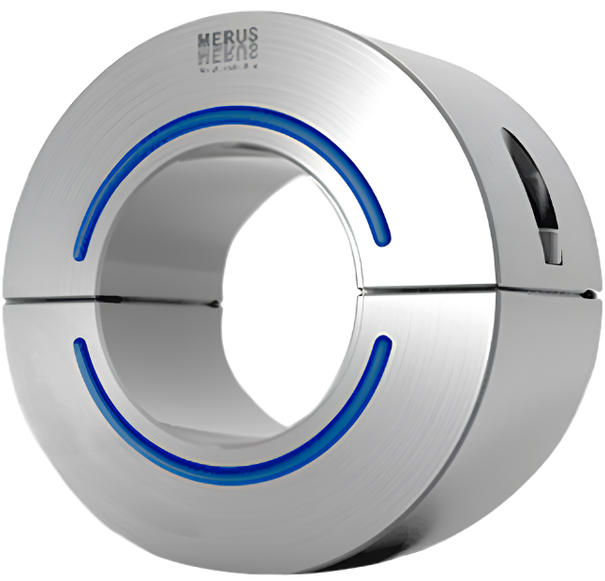
Merus Ring is fitted to the outside of the pipe, with no cutting, no chemicals and no interruption to operation. It emits low-intensity active oscillations that pass through the pipe wall and travel in the direction of flow.
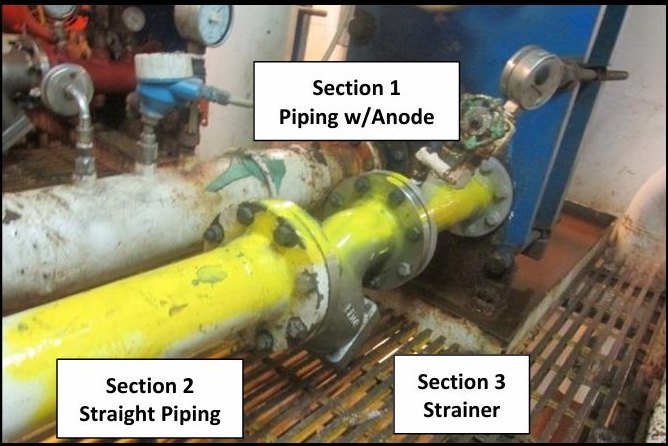
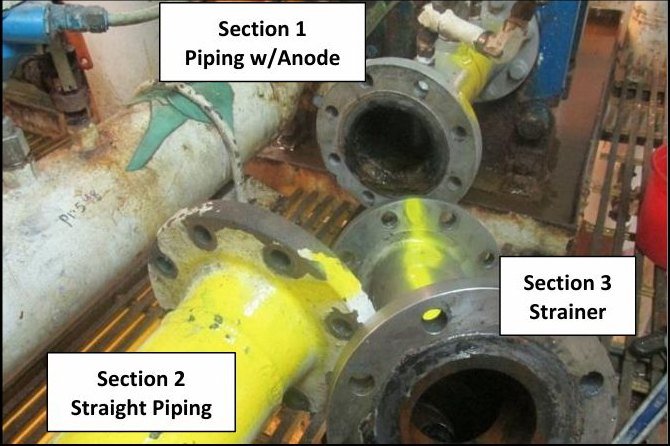
Line 706, 16". Source: Merus GmbH.
Piping with anode
A new anode was installed on 10 September. On 29 October it showed 10% wastage, a normal rate, and on 28 December no further significant degradation was observed.
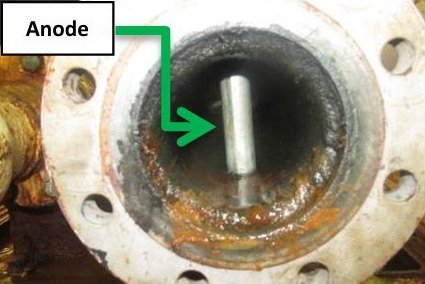
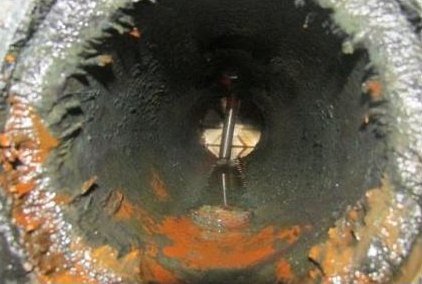
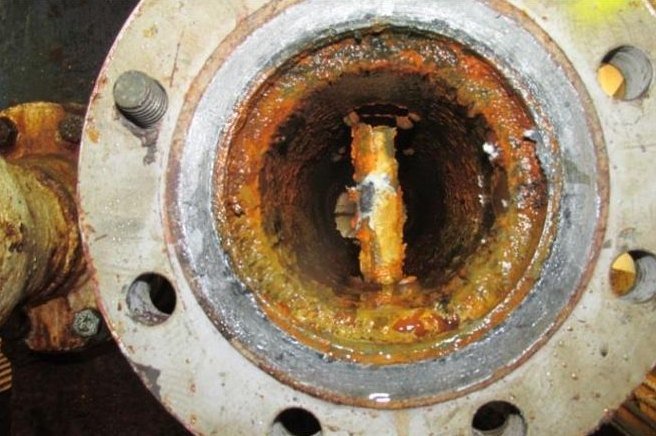
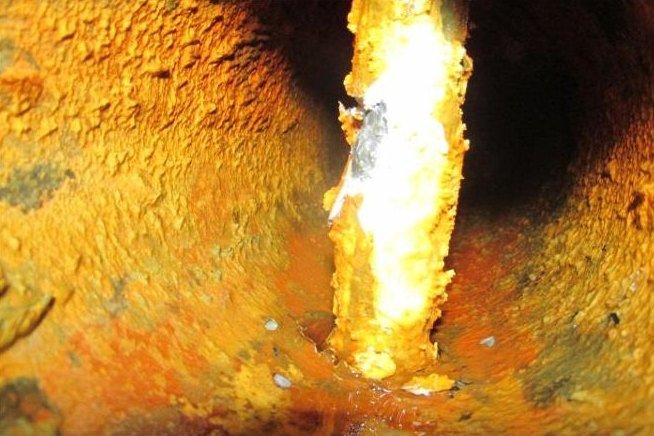
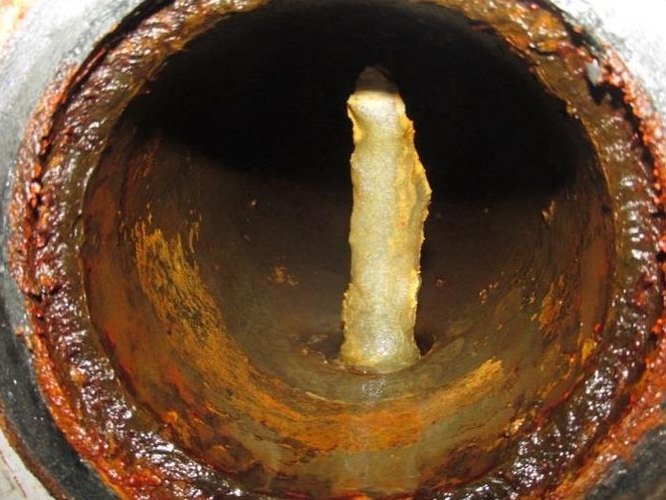
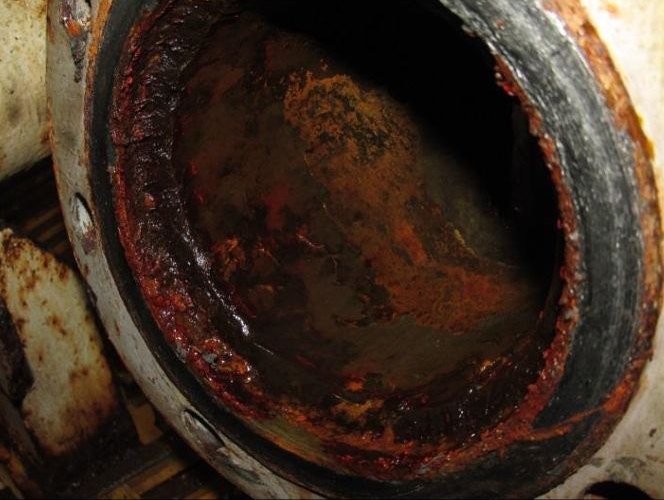
Section 1, piping with anode. Source: Merus GmbH.
Straight piping
The straight pipe section was inspected on the same three dates.
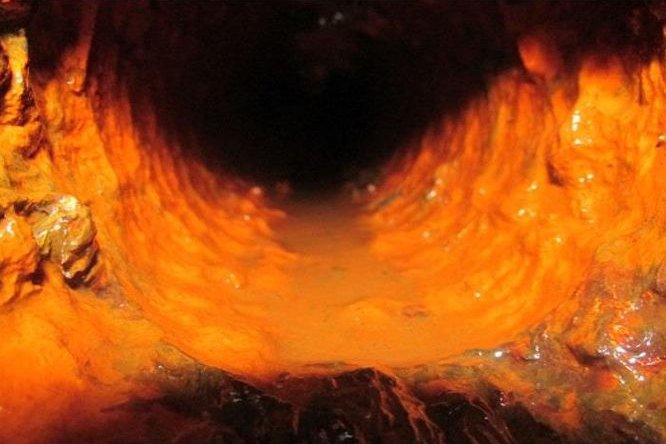
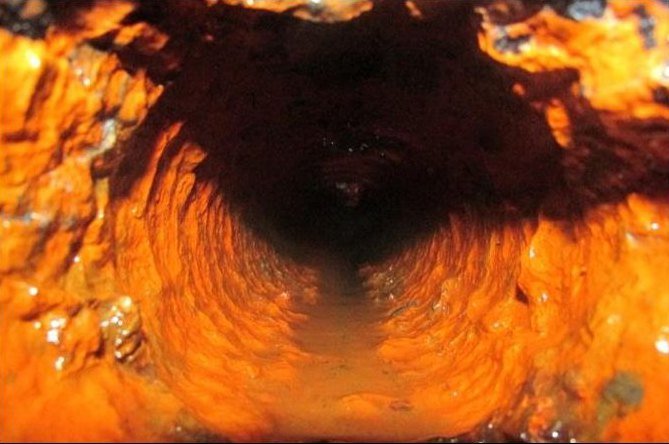
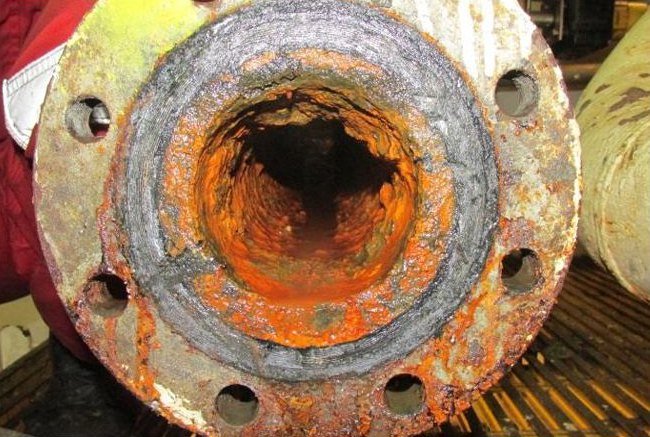
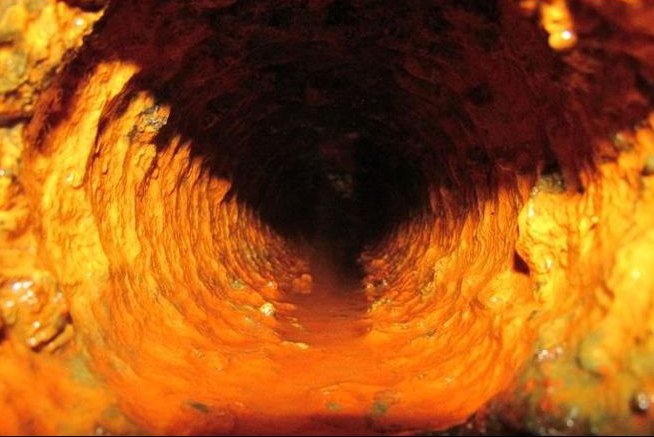
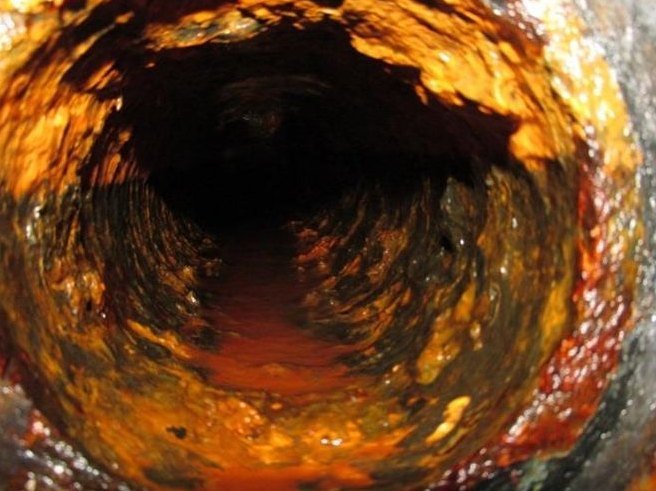
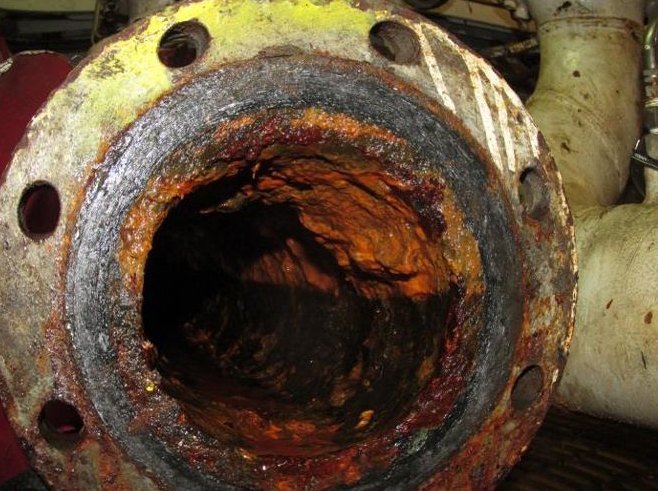
Section 2, straight piping. Source: Merus GmbH.
Strainer
The strainer was inspected on the same three dates.
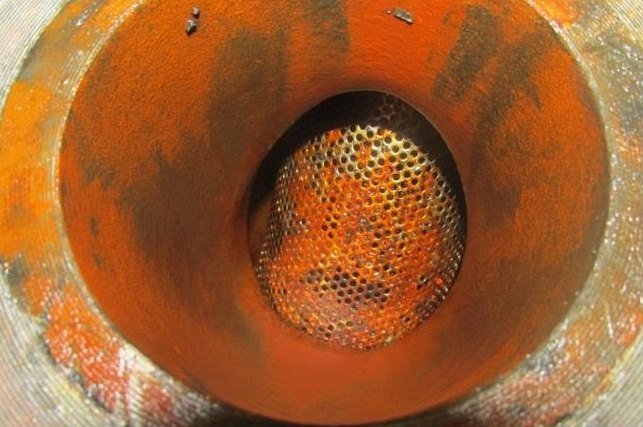
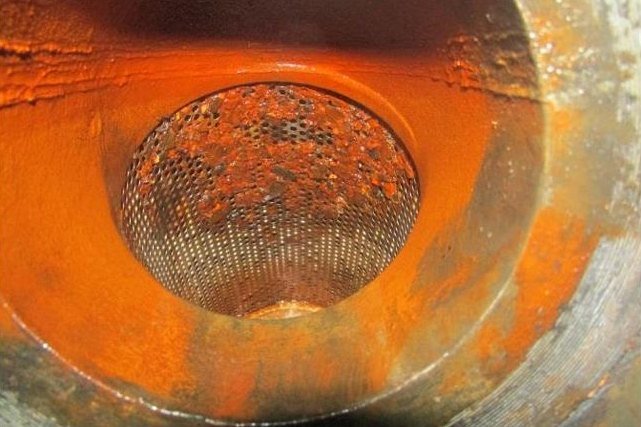
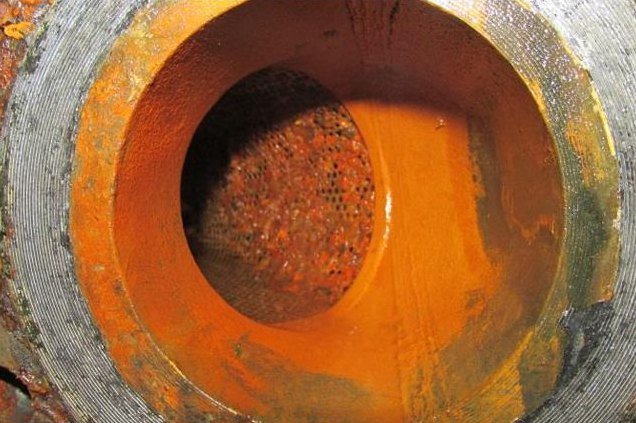
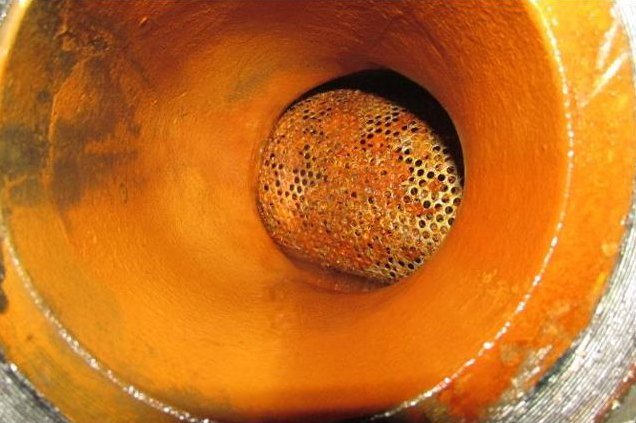
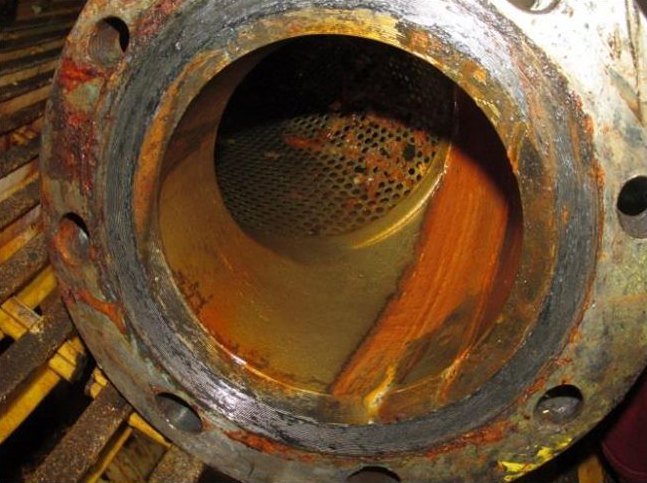
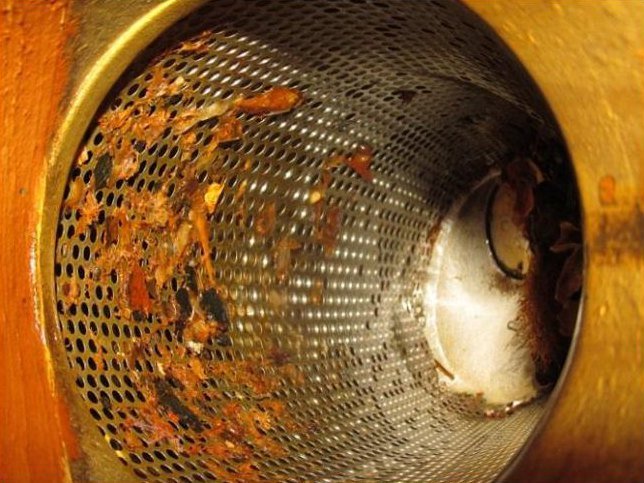
Section 3, strainer. Source: Merus GmbH.
What was observed
Comparing the photographs from September, October and December 2017 shows good results overall, and the Merus Ring test was considered positive under these conditions.
The effect of the ring is such that it not only prevents incrustation from forming, but also removes existing incrustation from the pipe internals over time. This was confirmed in situ during the test.
The equipment met the original performance expectations and preserved the internal condition of the pipework assessed.
Seawater line pilot
A 6-month pilot on a seawater line
Valid for the line or unit with the most scale or corrosion in your plant. Measurement protocol agreed before installation: periodic visual inspection, corrosion coupons, anode consumption and cleaning frequency.